Showing posts with label New South Wales national park. Show all posts

Thursday, 8 December 2016

Back on the Road - Port Macquarie to Devonport

Crowdy Bay

2 - 3 December

After three weeks waiting to have the camper trailer repaired we were relieved to finally get back on the road. Because of the delay we decided to head south to Tasmania and Christmas with daughter, Julia, rather than heading home and flying down as we had planned. With airline tickets cancelled and Spirit of Tasmania passage booked we left Port Macquarie for the short drive to Crowdy Bay National Park. We had booked a spot at Diamond Head Campground for an overnight stay before tackling the traffic going through Sydney.

As we expected the campground was almost full, with lots of families enjoying the sunshine and beautiful surrounds. We set off early in the morning for the drive through Sydney - one that we were not looking forward to at all.


Blayney

3 - 4 December

We drove south towards Sydney, making very good time on the motorway, but not enjoying the increasing traffic closer to Sydney. We stopped for a cuppa at a rest area, then lunch at Hawkesbury River Rest Area at Mooney Mooney. Refreshed, we drove on, turning west towards the Blue Mountains. Our aim was Bathurst and the GPS (otherwise known as the crazy woman) decided that the best way to get there was via Windsor and the Bells Line of Road. 

The drive through farmland and then mountains is quite picturesque in parts so we enjoyed this part of the drive. Because we made such good time we arrived in Bathurst earlier than intended so continued on the Blaney, where we stopped for another overnighter in the caravan park.


Yackandandah

4 - 5 December

Heading through Wagga and on to Albury we made the decision to continue on to a smaller town for our overnight stop. We chose Yackandandah and were pleased with what we found. A small and friendly town, in a lovely setting on the way towards the Victorian High Country, Yackandandah suited our needs very well.

I started having problems with my left knee at Crowdy Bay so was restricted to hobbling around slowly and painfully on this leg of the trip. As a result there are not many photographs. 

In the morning at Yackandandah I heard the telltale calls of Gang-gang Cockatoos in the surrounding bush. With an effort I managed to lug my heavy camera to the tree line to look for them. There were five or six cockatoos calling and flying between tall gum trees at the bottom of the park. Though too high and distant for any great shots, I was happy to get a record of these beautiful birds. Mick

Juvenile Gang-gang Cockatoo.
Male and Female Gang-gangs, possibly looking for a nest hollow.
Before heading off in the morning we stopped at the bakery for coffee and fresh bread. Next stop Bendigo.


Bendigo

5 - 7 December

We had found a caravan storage yard in Bendigo so made that our last stop before heading to Tassie. We checked into a caravan park for two nights, with the option of adding some more days if needed. We checked the weather forecasts, and the forecast for  Bass Strait, and decided to change our Spirit of Tasmania booking to the evening of 7 December. This gave us a sunny day and clear night before having to pack up the canvas for at least 6 weeks in storage. It also gave us a promised calm crossing. Perfect!
There were a number of Red-rumped Parrots around the park. This is a young male.
We spent the day in Bendigo, stocking up on a few things we needed, and having a look around the city. There are some beautiful buildings, thanks to the Victorian gold rushes.

On Wednesday morning we had plenty of time to get packed up. rearranging items to ensure we had what we needed for Tassie, and leaving behind what we didn't. After dropping off the trailer, we drove back into town to the Golden Dragon Museum. This museum tells the proud history of Bendigo's Chinese community. We could have spent much longer here had we not needed to get to Melbourne in time for the boat to Tassie.

Nanken Night Heron (breeding plumage). Patrolling the fish pond in the Chinese garden.
We set off after lunch and made our way into the centre of Melbourne - doing battle with the spaghetti loops of the multiple freeways and toll ways. We didn't really get lost this time, relying partly on the GPS and partly on instinct. Finding our way to Port Phillip Bay, we found parking and a cafe on the beach, where we had afternoon tea (OK - ice cream) before driving the short distance to Station Pier just on 5:00pm where we checked in for our Bass Strait crossing.


St Kilda beach. The bright and breezy weather had attracted scores of kite surfers and sailing boats.
Our ride, the Spirit of Tasmania in the distance.
The wind had dropped noticeably by the time we weighed anchor  for the 'Apple' Isle.
It was a calm and uneventful crossing... the best type.


Monday, 2 November 2015

Ganguddy (Dunn's Swamp) and Wombeyan Caves


Ganguddy - Dunn's Swamp

29 - 31 October 2015

We left Mudgee by 9.30am and drove back down the Castlereagh Highway toward Lithgow – turning off towards Rylestone, on the way to Ganguddy (Dunn’s Swamp). This is Wiradjuri country, home of the Dabee people and it is beautiful! We arrived at lunchtime after a short stop for coffee in Rylestone. This is a popular campsite but we found a spot a little way away from a big group of caravans and campers. The weather was beautiful so we ventured out for short walk. There are a  number of walks that leave from the camp and picnic grounds.

Nearly always the first creature encountered in a new camp.
Weather sculpted, sandstone outcrops and Scribbly gums give this landscape its unique character.

Another photographer pointed out a spot where he had photographed lyrebirds so Mick was keen to check that out. He was rewarded with a good look but only passable photos, but the big excitement on the way back to camp was the, so far, elusive rockwarbler. This is New South Wales’ only endemic species, and Mick has been chasing it for some time, and it was less than 50 metres from our camp!

A rockwarbler at last!

Superb Lyrebird.
We took the Campsite Rocks walk, where interpretive signage explains the history and geology of the area. The rock overhangs were used by the Dabee and hand stencils can still be seen. As in many parts of Australia, this area also has a shameful history of massacre of local aboriginals.

There was some firewood supplied so we collected some, anticipating a cold night – and we weren’t wrong. A camp fire before bed, and both quilts ensured we were snug and warm throughout the night. It was only 7 degrees at 7am so a slow start was in order.

Despite the cold overnight temperature, the morning was clear and bright and shaping up to be another beautiful day. We decided on the walk that took us to the Cudgegong Picnic spot and along the water. This was a very good choice. The well-made track was fairly level and made for a pleasant amble through the bush. Not many birds but lots of photos of the magnificent scenery.We spent some more time walking in the afternoon around the campground rocky outcrops.

Cudgegong picnic place.
Platypus Point
We decided to stay an extra night because this was such a beautiful spot, so paid an extra night’s registration on Friday morning. We headed out after morning tea on the Weir Walk. Again a beautiful walk, but much more challenging than the one we did the previous day. This one had a number of steep climbs and required a few rest stops. The morning was hot, which didn’t help. I called a stop when we reached the bottom of the stairs up to the lookout. Mick accepted the challenge and climbed to the top to take some photos. We headed back to camp rather than continuing on to the weir.

Australian Painted Lady
Butterflies and wildflowers were abundant along the walking tracks.
The view was spectacular, but the walk challenging
Later in the day our friendly neighbours – also Queenslanders - offered us the use of their kayak, so we each had a short paddle on the water. This is a popular pastime here.

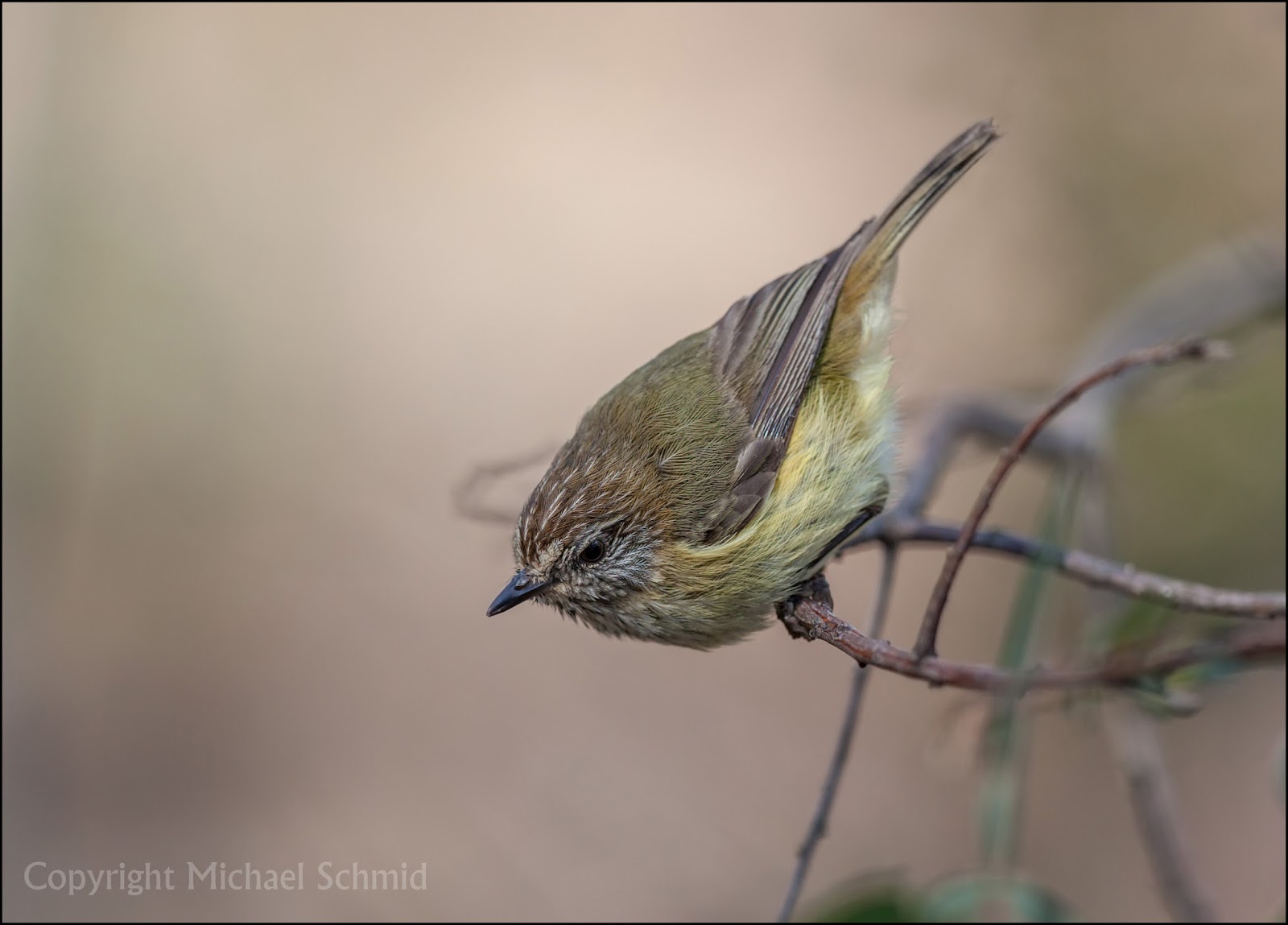
Striated thornbill
Superb fairywren
White-throated gerygone
Cunningham's skink

This campground is reasonably priced at $6 per person per night (self-registration on arrival), and well set out with sites suitable for tents, caravans and trailers. There are toilets scattered around and lots of fire pits as well. Well done NSW Parks and Wildlife! I think Ganguddy is now on my list of must see places.


Wombeyan Caves Karst Conservation Park

31 October - 2 November 2015

We left Ganguddy and drove into Kandos for supplies. There is a big IGA supermarket as well as a butcher and op shop. We went back to the Castlereagh Highway, then turned off at Ilford for the alternative route to Bathurst. We stopped at Sofala, another old gold town, and had a coffee at the little museum in the back blocks. There were also a couple of coffee shops and a pub in the main street. From there we drove through Bathurst, towards Oberon. We finally spotted a picnic area for lunch at the Fish River. It had picnic tables and a toilet and was right on the river. From there we made our way to Oberon. Because the weather was looking very nasty, we thought we’d shout ourselves a cabin for the night, but the caravan park was fully booked. Perhaps people stay there on the weekend to visit Jenolan Caves, as the road from Oberon is better than the one from Lithgow. 

We drove on to Wombeyan Caves as this was where we intended to go next anyway. We settled into a powered site in the caravan park section and the rain started to fall. Lucky we arrived when we did. The temperature dropped significantly and the wind blew – but we remained warm and dry in the camper trailer. 

The morning dawned with clear skies, even though it was still quite cold. We spent some time getting the washing done (cheapest washer and drier ever - only $1 per load!), and by that time the temperature had risen and we set off on the Waterfall Walk. Again a challenging walk with the narrow path, very loose underfoot, skirting the high bank along the creek. There were plenty of up and down sections too. We only went as far as the first creek crossing - about 1 kilometre – then headed back to camp for lunch.

Satin bowerbird
Male Satin bowerbird
After lunch we went for a walk down to Victoria Arch. You can visit a number of the caves on a guided tour, or one as a self-guided tour, but all have many stairs. The Arch is easy to access and is still quite a sight – not unlike the Grand Arch at the entrance to Jenolan Caves. We spent some time there – with the temperature noticeably colder as you enter.

The very impressive Victoria Arch
On returning to camp, the evening was much warmer than the previous one, and the camp ground much more deserted – all the weekend visitors had left. Our peaceful night was not to last long as another fierce thunderstorm crashed around us, and without internet or phone access we were unable to get any details (such as the BoM weather radar or warnings). The worst of the storm didn’t last too long, but we did shelter for a while at the laundry as the lightning flashed nearby. Once the worst was over, we returned to the camper and settled down, only to be woken again in the early hours by more wind and rain. The camper withstood the onslaught, and was mostly dry by the time we came to pack up. We missed the next shower of rain by minutes only.

Wednesday, 29 April 2015

Gundabooka National Park - near Bourke

24 – 25 April  2015


We had read about this park, and the lady at the visitor centre recommended Yanda Campground as the best spot to camp. We drove out of Bourke and then turned onto the mostly unsealed Louth Road. The campground is signposted, but with the smallest writing possible so it was necessary to slow almost to a stop to read the directional signage. Turning right off the road, the road to the campground is only a few kilometres, but quite rough in parts.

We were told the campground is right on the creek – and it is, but it’s quite a walk down to the water.  We selected a spot close to one of the picnic shelters and not too far from the (hybrid) toilets, and set up our camp. We didn’t bother with the awning or table as the picnic shelter had ample space as well as a free gas barbecue – which we later learned wasn't working. I hope the next user appreciates how clean we left it.
An opalescent sunset more than compensated for our lack of proximity to the water.
We were fortunate that we were the only ones camped there and looked forward to a peaceful night when we saw the headlights of 5 vehicles. We were somewhat concerned as we have heard horror stories if rowdy young people arriving in campgrounds like this, after dark, and causing quite a nuisance with unruly behaviour (gosh I am sounding old and cranky!). Anyway we need not have worried, this group of young people set up camp and hardly disturbed us. We heard them going to and from the toilets, but they had turned in by about 10pm. Perhaps they were really old people masquerading as young’uns.

Hooded Robins are common but not as common as Jacky Winters.
A lucky catch. This Black Falcon flew past late in the afternoon and for once the focus was bang on.
We took our time in the morning to pack up and left for Bourke, intending to stock up on supplies – silly mistake. It was Anzac Day and all the shops were shut, except for the bakery which was going to be shut during the Anzac March. We stopped in to buy, what turned out to be, a very nice loaf of bread. I can recommend this little bakery.

We tried to fuel up, but waited an inordinate amount of time and gave up, confident the long range fuel tank on the Prado would get us to Cunnamulla. It’s 250km from Bourke to Cunnamulla and most of the road is straight, with a 110km speed limit, so it was an easy drive – except there are a couple of rest stops but not one toilet – be warned! When we arrived we found the town to be closed – nothing was open. We were able to get fuel at a 24hour card operated bowser, but that was it. So much for our plans for meals for the next few days. It was a Saturday and apparently Cunnamulla is closed on a Sunday too.

We made our way the short distance to Bowra Bird Sanctuary, which was to be our home for the next three nights. 

Friday, 24 April 2015

Goobang National Park

22 – 23 April 2015


It was still raining and cold when we left the cabin, but a quick stop for coffee in Oberon warmed us up. We fuelled up in Bathurst then stopped at the visitor centre in Orange to get information about camping at Goobang NP.

We had a quick lunch stop at Molong – still windy and cold – then on through Yeoval and Baldry to Greenbah Creek camping area in the national park. The road from Baldry is unsealed, and the road within the park is very rocky, but the camping group is only 6km along this road so it didn’t take long. There are a number of sites, mostly level, some picnic tables, firepits and a toilet. We chose a spot, hoping the last of the dark clouds would move on, and set up our camp.

Speckled Warbler
Galah
Eastern Rosella
This is a nice place but I didn't manage to turn up many birds, probably due to my lack of persistence more than anything. In Spring I'm sure there would be much more activity, not just here but in most of the locations we've been to this trip. It was nice to find a Speckled Warbler on my morning walk although I couldn't get as close as I'd like. Mick.

There was only one other couple camped at this spot so it was a quiet night – cold but dry. Kangaroos grazed the grounds and in the morning one came right up to us, looking like it wanted a hand-out. There had been a heavy dew during the night so we had to wait until about 9.30 for the tent and awning to dry out. It wasn’t hard to do, this was a very nice, peaceful spot.


This Roo was obviously after a free feed.
Getting ready for an Antarctic expedition.
When we finally hit the road we headed towards Bourke, with a view to seeing how far we could get.

Monday, 9 March 2015

Khancoban

6 - 7 March 2015


The drive from Canberra through Cooma and into the "high country" is quite beautiful, but very tiring with lots of very steep and windy sections. It is not recommended for caravans, with good reason. 

We fuelled up and had lunch in Cooma which is a very pretty little spot, then drove on along the Alpine Way towards Jindabyne. Once you enter the National Park you have to pay park fees, unless you are transiting through.

We were surprised to see that many of the trees are dead - probably affected by some sort of die back. Such a shame.

We stopped at one of the small number of campsites along the way for a stretch. It would have been a beautiful spot to camp - but would probably been very cold overnight. The only facilities are a "long drop" toilet.

Mountain stream.
A young robin, not sure what species.
Shouldered Brown butterfly.
We had hoped to go a little further, but were tired and hungry when we arrived at Khancoban so opted for a night at the pub. A decent meal and a warm bed and we were satisfied.


Thursday, 5 March 2015

Warrumbungle National Park

1 - 3 March 2015


The morning dawned clear and with good forecast weather we left Tenterfield with a view to camping at the Warrumbungles. We stopped at Glen Innes at the visitor centre, and following the recommendation of staff drove up the the "Standing Stones"  for morning tea before heading along the Gwyder Highway towards Inverell, then on to Delungra and Bingara for lunch. Then it was on the Inverell and Coonabarabran, before driving into the Warrumbungle National Park.

The view from our camp. Lots of Kangaroos grazing in the paddock.
We chose to stay at Camp Blackman and quickly set up the tent as it looked like rain. We checked the BOM and the forecast fine weather had been replaced with a severe weather warning! The rain radar showed a storm, headed our way, but it didn't look too big or too severe. We packed a survival kit (consisting largely of cold beverages) and retreated to the covered area to wait out the storm and then resumed our camp set up. The rest of the evening was meteorologically uneventful, but the campsite was inundated with a large group of Norwegian students on a whirlwind Australian tour.

White-winged Chough
Much of the park had been burnt by bushfires in 2013 with some damage to infrastructure, including the destruction of the visitor centre. This should not detract from a visit as there is much regeneration evident. We headed over to the temporary visitor centre when it opened at 9.00am to book a second night and found the staff member on duty to be very well-informed about the location of certain bird species. She made several suggestions about walks which may yield the target species. We chose first to try the Spirey Creek track, a short drive away. We took the left branch, which was apparently easier than the other one. The track is very well made, even paved in sections, and makes a very slow, steady climb so that all the uphill work is on the way out, and the way back is just a gentle downhill walk. Because we had left late, we were walking in the heat of the day so turned around and returned to camp after an estimated 5km walk.

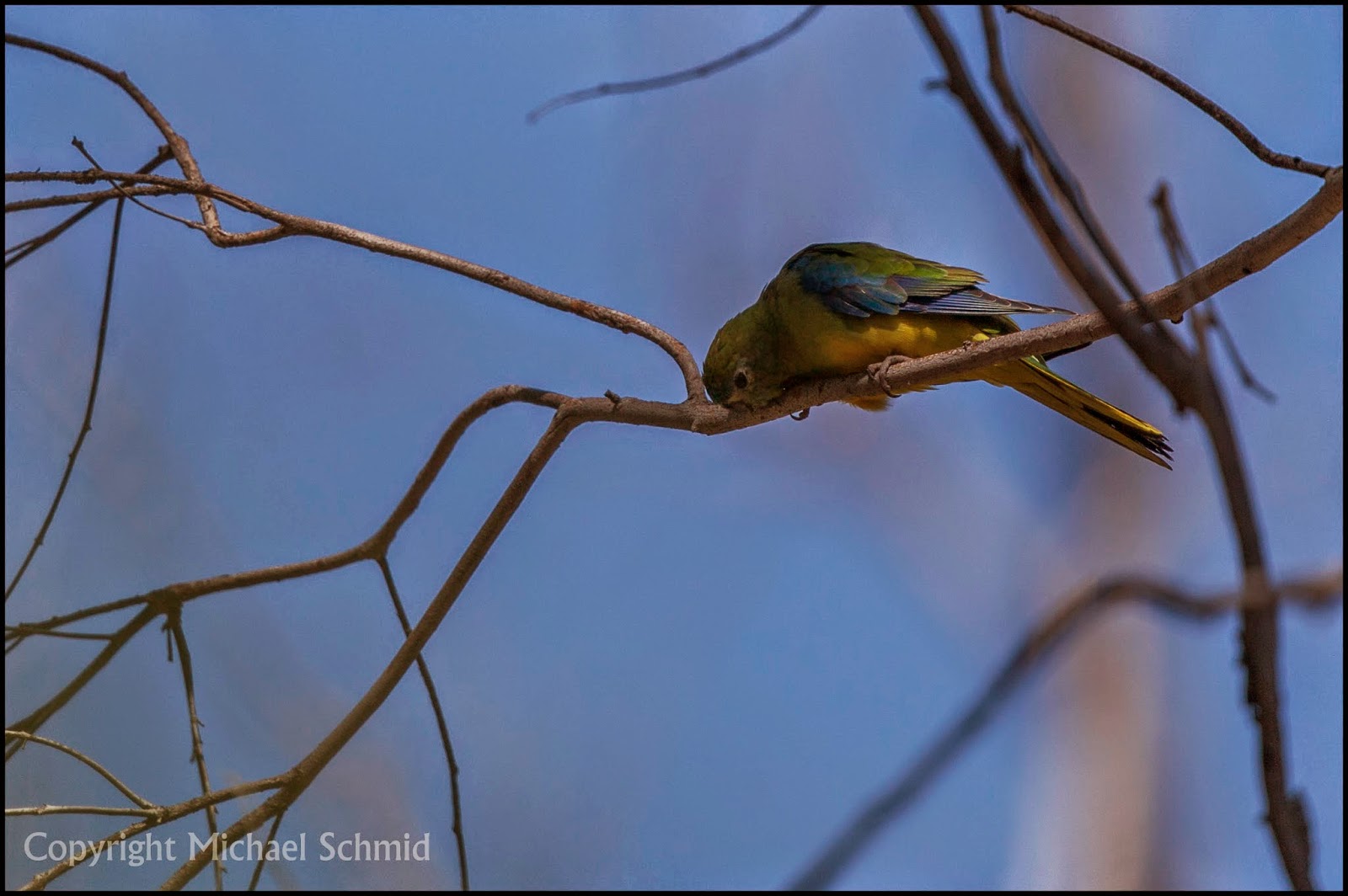
Female Turquoise Parrot. The bird I didn't know I had seen until I edited the photograph.
Yellow-tufted Honeyeater were seen on most walks.
Later in  the afternoon we set out for a walk that would take us to a creek that may have some water from  a spring. We were told it should take about 20 minutes to get there but after walking across open ground, in the hot sun, for about 45 minutes we gave up and turned around. This is not a walk we would recommend. There was little bird life, and almost not shade - but it is fairly flat.

We packed up camp early on Tuesday morning so we could have another go at the Spirey Creek walk - this time taking the west track. We kept walking until it started to go uphill, then turned around. This is another nice walk. All up we estimated we walked about 15km over the three walks we did over tge two days. Not a bad effort - but our bodies were feeling it a bit, so we treated ourselves to ice-creams when we stopped for supplies in Gilgandra.

Red-rumped Parrots were very common but still a delight to encounter.
Cockatiel rested in the trees around our camp during the heat of the day.
Sulphur-crested Cockatoo showing off on a nearby power line.
Another common species, the Superb Fairy-wren.
After a picnic lunch in Dubbo, we made our way to Cowra and a cabin for the night. Mick was feeling unwell and he had to visit a doctor on Wednesday morning go have the stitches removed from his finger.