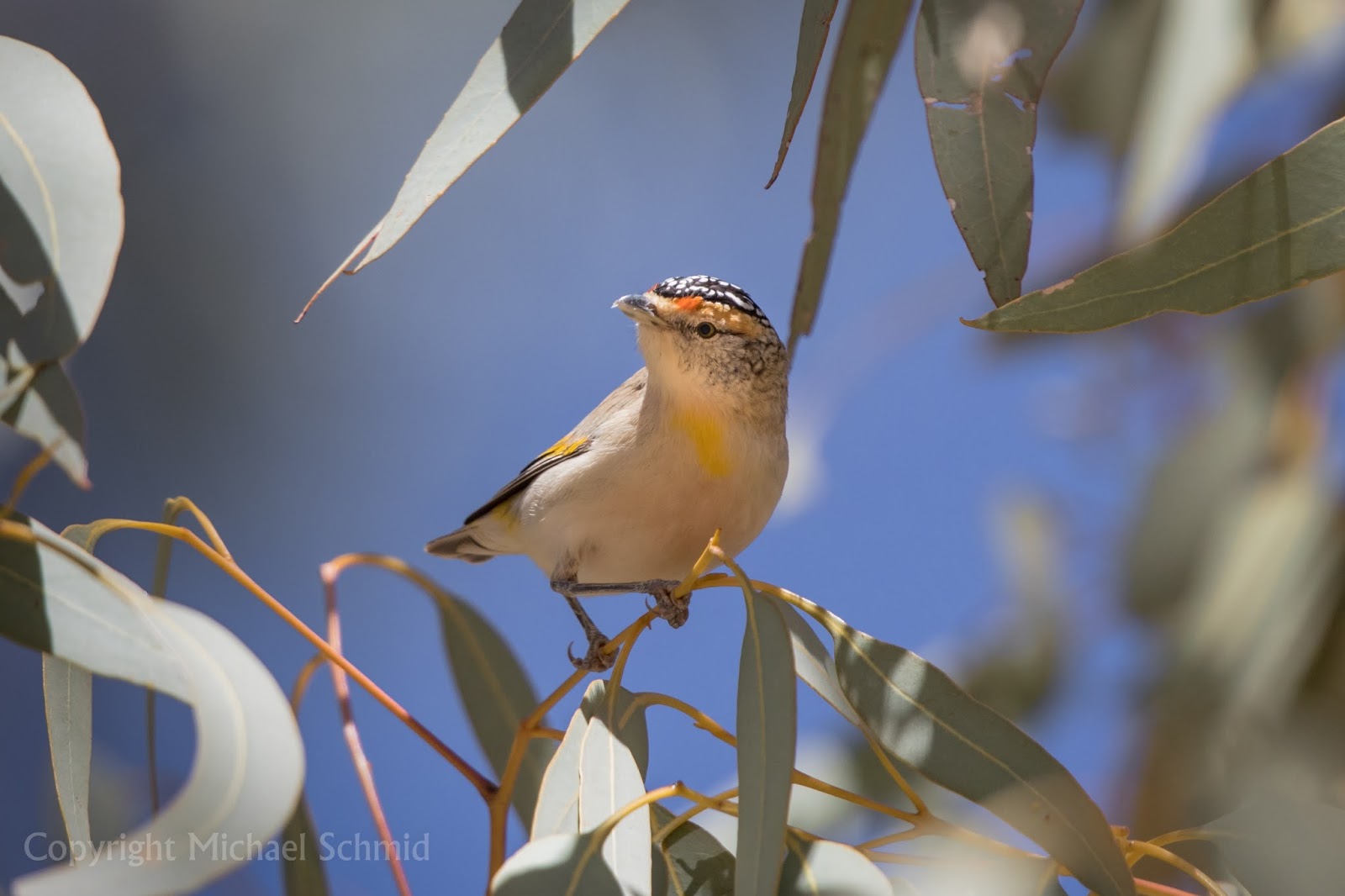
Sunday, 3 September 2017

Back to Alice Springs

30 August – 3 September 2017

We arrived back in Alice Springs, looking forward to a few days “in town” only to find out we had arrived in time for the Red Centre Nats. This event attracts “motoring enthusiasts” from throughout the country and it seemed that every one of them chose the road outside the caravan park to rev their engines and show off their noisy motors. Unfortunately this spoiled an otherwise pleasant stay. Must remember to check the events calendar before we return!

After ten days away from town (and then it was only Yulara) we had lots of catching up to do – including shopping and washing so we spent Thursday doing just that, and enjoying the luxury of an ensuite site at the caravan park. We stumbled across the recycling shop at the dump and stocked up on books at $1 each – great value.


On Friday morning we had booked a visit to the Ilparpa Ponds with a local birdwatcher. These sewerage ponds are very popular but access is restricted – visitors must book a visit with one of a number of local Birdlife Central Australia or Alice Springs Field Naturalist Group Members, as well as complete an online induction.

Early in the morning the ponds were like mirrors. The smell was not as bad as you might think.
Red-necked Avocet.
An Australian Pratincole.
Fairy Martin
Male Orange Chat. A new bird for me making this a worthwhile trip!
We met Pam, our guide, at 8:00 am and spent 2 ½ hours wandering around the site. Mick was able to get a few nice shots of birds, but not what he had hoped for. Pam generously offered a return visit which we readily accepted. We joined her for a lovely morning tea at the café at Olive Pink Botanic Gardens and finalised the arrangements for another trip to the ponds on Saturday in the hope that there might be some different sightings in the afternoon.


Black-shouldered Kite
Wood Sandpipers were quite common.
On Saturday we spent the morning up at the Old Telegraph Station, this time completing the Bradshaw Walk. The loop which returns to the information shelter via the Riverside Walk is 3.8km and rated Grade 3. We found it a relatively easy walk, but it was very hot so we were glad we had taken plenty of water with us. After our walk we shouted ourselves morning tea at the onsite café.

As arranged we met Pam at the ponds at 3:30pm and spent another 1 ½ hours – this time spotting the Australian Spotted crake – apparently that’s good. I had to go along on both visits as the rules state there must be a minimum of two for any visit to go ahead.


Australian Spotted Crake. Another new bird for me!
We got great views of a female Orange Chat on our second visit.
Whiskered Tern

I really enjoyed our visit to Ilparpa Ponds and our guide Pam was very enthusiastic and helpful. There were lots of great birds around. I had some reasonable photo opportunities but the rules are quite strict about where you can go and what you can do. For the most part it is impossible to get close to or level with the waterbirds. The dilapidated hide in the centre of the ponds complex is a great spot to see Orange Chats and is suited to morning light. You could get lucky and bag a rare visitor here like the Red Necked Pharlarope that I was a month too early for. Mick.

This time we left Alice Springs headed west towards Palm Valley in Finke Gorge National Park where we hoped it wouldn't be as noisy.


Wednesday, 30 August 2017

Ellery Creek Big Hole - Tjoritja/West Macdonnell National Park

28 – 30 August 2017


Another very popular spot, Ellery Creek Big Hole is only a short drive off the highway along an unsealed road. With fewer camp spots, it is wise to arrive early, which we did. The spots are all different shapes and sizes and are sited around a central picnic and barbecue area. There are flushing toilets, but no drinking water. There is a large day use area between the gorge and the campground.

The gorge is easily accessible via a paved pathway and the proximity to Alice Springs makes this another spot that can get quite busy. We spent lots of time just sitting by the waterhole, watching the birds and enjoying the peace and quiet – until the tour buses arrived!

An Inland Thornbill near the camp.
A very pretty waterhole but very crowded at times.
This was a lovely place to sit and watch birds coming in to drink and bathe or the grebes hunting for insects. Grey-headed and White-plumed Honeyeaters came down regularly and Rainbow Bee-eaters plunged into the water from their lofty perches in the river red gums. I saw a Crimson Chat attempting to get to the water but it gave up due to the many people walking past. If it weren't for the crowds this would be paradise. Mick.

Rainbow Bee-eater
White-necked Heron. There were about fifteen of these in the gorge one morning.
 Australasian Grebe. Many gorges had a resident grebe.
Non-breeding Australasian Grebe
Having a rest.
A Willy Wagtail coming in to drink.
Male Magpie Lark
We did tackle the one longer walk at Ellery Creek, the Dolomite Walk. This walk is a 3km loop and is a Grade 3. It meanders up and down hills and affords really good views of the fascinating geology of the area. Eventually the walk drops down into the creek bed for the return to the campground.

Amazing textures.
Rock formations on the Dolomite Walk.
I finally got a shot of a Red-browed Pardalote toward the end of this walk.
As the last pools in the creek dry up, there is no hope for the doomed fish.
The easy to catch fish make a meal for this Australian Magpie.
Attempting mouth to mouth resuscitation?

Next it was back to Alice Springs for a visit to the Ilparpa Ponds - yes, that's the sewerage works!


Monday, 28 August 2017

Ormiston Gorge - Tjoritja/West Macdonnell National Park

25 – 28 August 2017

Our next stop was Ormiston Gorge. From the main road it is bitumen all the way to the visitor centre and campground. That, and the addition of a kiosk and easy access to the gorge and waterhole, make this a very popular spot, especially on weekends. We took the advice of reviewers and arrived early. 

There are 20 camp spots in the dusty and tight packed campground and we were lucky to get one on the end of a row, with some afternoon shade. The sites vary in size and some are quite short while others are on a slight slope. The facilities at Ormiston Gorge include hot showers and flushing toilets as well as a new, yet to be completed, barbecue area. The kiosk sells drinks and snacks as well as lunches. If you don't like crowds it would be best to avoid Ormiston Gorge on weekends in high season.

Grey Shrike-thrush in the camp ground.
Spinifex Pigeons are common around the camp ground.
There is just a short walk to the gorge and waterhole along a paved pathway. While on our way we stopped to chat to a local (Alice Springs) bird guide who suggested a couple of likely spots. We took his advice and walked further along the creek to some smaller waterholes where birds come in to drink. There is also the longer and harder Ormiston Pound Walk, which we were assured was worth it for those keen enough to attempt the 3 - 4 hour trek.

Early morning in the gorge.
Ormiston Gorge
Guide, Mark Carter told me where to look for a Spinifexbird. I found the bird (a new tick) but could not get a decent shot.
Wildflowers near the Spinifexbird site.
A very popular walk is the Ghost Gum Loop. This walk takes about an hour and involves multiple well-made stairs (with handrail) up to a lone ghost gum, with a magnificent viewing platform. From there you can return via the stairs or continue on along the ridge and finally down into the creek bed for the return to the starting point. This walk is a Grade 3 but we didn’t find it as difficult as some. There were lots of rocks to climb over, but they weren’t as difficult as the ones at Redbank Gorge.

The steep climb to Ghost Gum lookout is worth it for the view.
The spectacular view from the Ghost Gum lookout.
Male Painted Finch.
Painted finches come down from the spinifex covered ridges to drink at rock pools in the gorge.
Little Woodswallows were about at the top of the loop.
We came across two groups of Dusky Grasswrens on the Ghost Gum Loop. They weren't shy at all.


A black-footed Rock Wallaby catching some sun.

We enjoyed three nights at Ormiston Gorge, visiting the waterholes each day, and taking lots of bird photos. Our next stop was again only a short distance - Ellery Creek Big Hole.


Friday, 25 August 2017

Redbank Gorge - Tjoritja/West MacDonnell National Park

23 – 25 August 2017


The road in to Redbank Gorge is designated 4WD only and was in rough condition. The Woodland Campground is a couple of kilometres drive from the gorge and in a bushland setting. There are 15 campsites and a couple of long-drop toilets. The best part of this campground is that each campsite has its own fire pit with barbecue plate as well as a gas barbecue with two extra gas burners. There is also a picnic table at each site. All this for only $5 per person per night.

A well equipped campground.
We drove down to the Gorge and went for the Gorge Walk which starts off along the bank and then drops down into the creek bed. This walk required quite a bit of scrambling across rocks. I was wearing my hiking sandals and found it quite difficult in parts. There wasn’t much water at the waterhole but it was a nice spot to stop and relax.
Redbank Gorge.
This Australasian Grebe was hunting insects in the gorge.
Grey-headed Honeyeater. We found a small pool that was favoured by honeyeaters taking an afternoon drink and bath.
Brown Honeyeaters
White-plumed Honeyeater.
We surprised a Black-footed Rock Wallaby on our way back.

Black-footed Rock Wallaby
The following day we returned - this time wearing my hiking boots - and walked back up to the waterhole again. It was much easier with my boots on. We also took the short walk from the carpark up to the lookout for some fabulous views.
  
Although there was not a great variety of birds around the campground, there was a mixed flock of Southern Whiteface, Hooded Robins and Grey Fantails that would be seen foraging around each day. I also saw Red-capped Robins and Chestnut-rumped Thornbill. Mick.

Male Hooded Robin
Female Hooded Robin.
Southern Whiteface
Southern Whiteface

This is one of the best equipped campgrounds we've stayed at. There were a couple of problems though. The sites were all facing the wrong way (awnings of most vans and camper trailers would face the dusty road instead the BBQ area), leading me to believe that the 'one way' sign at the entrance was put in the wrong place. We ignored it. The other problem is one we have encountered before at Coffin Bay NP in South Australia, the presence of large numbers of bees looking for water. If one is careful, they are quite harmless but they are annoying and I was stung on the thumb this time. Mick.

Our kitchen tap.
The bees particularly like the washing up sponge.
Because we were aware we would be able to have a fire, we had stopped for firewood before we entered the national park. We made bread in the morning and a camp oven roast chicken and vegetables in the evening. It’s a great way to cook if you can get it right. The bread would have been nice of not for the burned top, but the roast was perfect. We’ll just have to keep practicing with the bread.
Too many coals on top of the camp oven spoiled the bread. Better luck next time.
Before we left in the morning we headed back to the day use area carpark for morning tea and to look for some birds Mick had seen the day before. The road to the day use area is very steep in parts and probably not suitable for those towing a caravan. There is another campground – Ridgetop – which is for tents only and not as well resourced.

I was hoping to photograph the male Crested Bellbird (female) at the day use area but he didn't show up.
Our next destination was just down the road - Ormiston Gorge, a very popular stop in the West Macdonnells.